

Stakeholder Engagement
Identification of Material Topics
In line with the four principles of Sustainability Context, Materiality, Completeness, and Stakeholder Inclusivity, ITEQ has identified and evaluated key sustainability topics. The materiality assessment process follows the GRI Standards and incorporates the concept of double materiality with the goals of assessing and confirming ITEQ’s Material Topics for 2025.
Screening and Identification of Sustainability Issues
With reference to the international sustainability standards and frameworks—including GRI, SDGs, SASB, RBA, and the Dow Jones Sustainability Indices (DJSI)—the ESG Task Force held internal discussions to identify relevant topics. In accordance with the GRI Standards, and taking into account industry characteristics, global trends, and key issues identified by peers in the electronic components sector, the company screened and consolidated a total of 20 sustainability topics pertinent to its operations.
Evaluation of the Significant Level of Impact
- Material Impact Evaluation
Using actual/potential and positive/negative impact and the likelihood of occurrence as qualifiers, ITEQ assigned each ESG group and directed senior supervisors to fill out evaluation questionnaires to measure the level of impact of each sustainability issue on the external economy, the environment, and the local community. A total of 25 questionnaires were returned.
- Investigation of level of concern of stakeholders
We distributed questionnaires to stakeholders for the purpose of investigating the level of their concern in relation to the Company’s sustainability issues. A total of 126 questionnaires were returned.
Ranking of the Reporting Priorities of the Most Significant Impacts
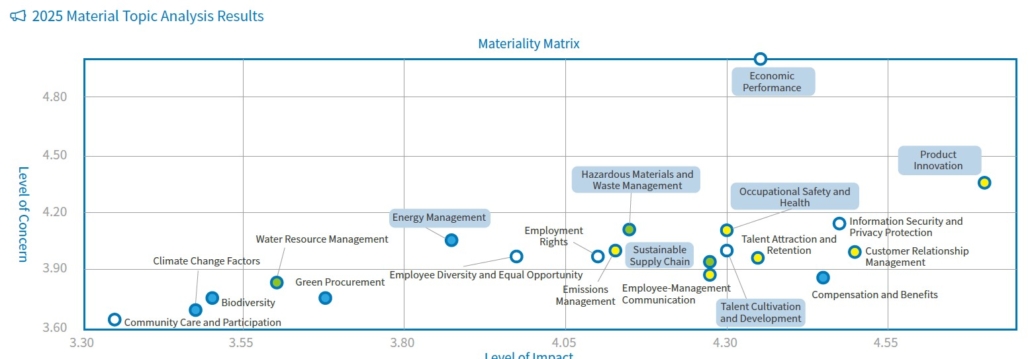
The relative distribution of each topic’s level of concern and impact was analyzed using a materiality matrix. This approach helped identify the material topics for 2025, resulting in a total of seven key issues: Economic Performance, Product Innovation, Occupational Health and Safety, Talent Attraction and Retention, Sustainable Supply Chain, Hazardous Materials and Waste Management, and Energy Management. These seven topics correspond to eight GRI Standards and two custom metrics.
After identifying the material topics, we reviewed the scope of these topics and the impact of such areas internally and externally to establish the reporting boundary. We also compared the responsive chapters of the report regarding each issue to ensure that the information of concern to stakeholders is completely disclosed.
Identifying Stakeholders
ITEQ references the AA1000 Stakeholder Engagement Standard (SES) and the GRI Standards to identify six categories of stakeholders based on factors such as dependence, responsibility, tension, influence and diversity perspectives as well as interaction frequency, and significance to operations. These stakeholder groups include investors/shareholders/financial institutions/creditors, government agencies, customers, suppliers, communities, and employees. To understand the concerns and expectations of each group, we maintain tailored and timely communication channels. A robust stakeholder engagement mechanism has been established, including designated contact points on the Company’s official website for each stakeholder group. Through this system, we actively collect feedback and identify key areas of interest. ESG-related indicators are then assessed to identify material topics, which in turn inform our risk management strategies and guide our operational planning.
Stakeholder Communication
ITEQ refers to stakeholders’ ideas and needs when managing key operations. To understand our stakeholders’ issues of concern and feedback, we have a well-established communication system and provide contact information on our website. This information serves as the basis for the analysis of material topics and the results were reported to the Board of Director at the end of each year. Below please see the stakeholder engagement of the Company:
| Stakeholder | Frequency and Channel of Communication | Communication Performance | Issue |
| Investors/ Shareholders/ Financial Institutions/ Creditors |
|
|
|
| Government Agencies |
|
|
|
| Customers |
|
|
|
| Suppliers/Contractors |
|
|
|
| Communities |
|
|
|
| Employees |
|
|
|